Beyond Listicles: Choosing the Best Platforms for AI-Driven Search Intent Content Generation
Written by the chatgptgrow.com content team
9/5/2026
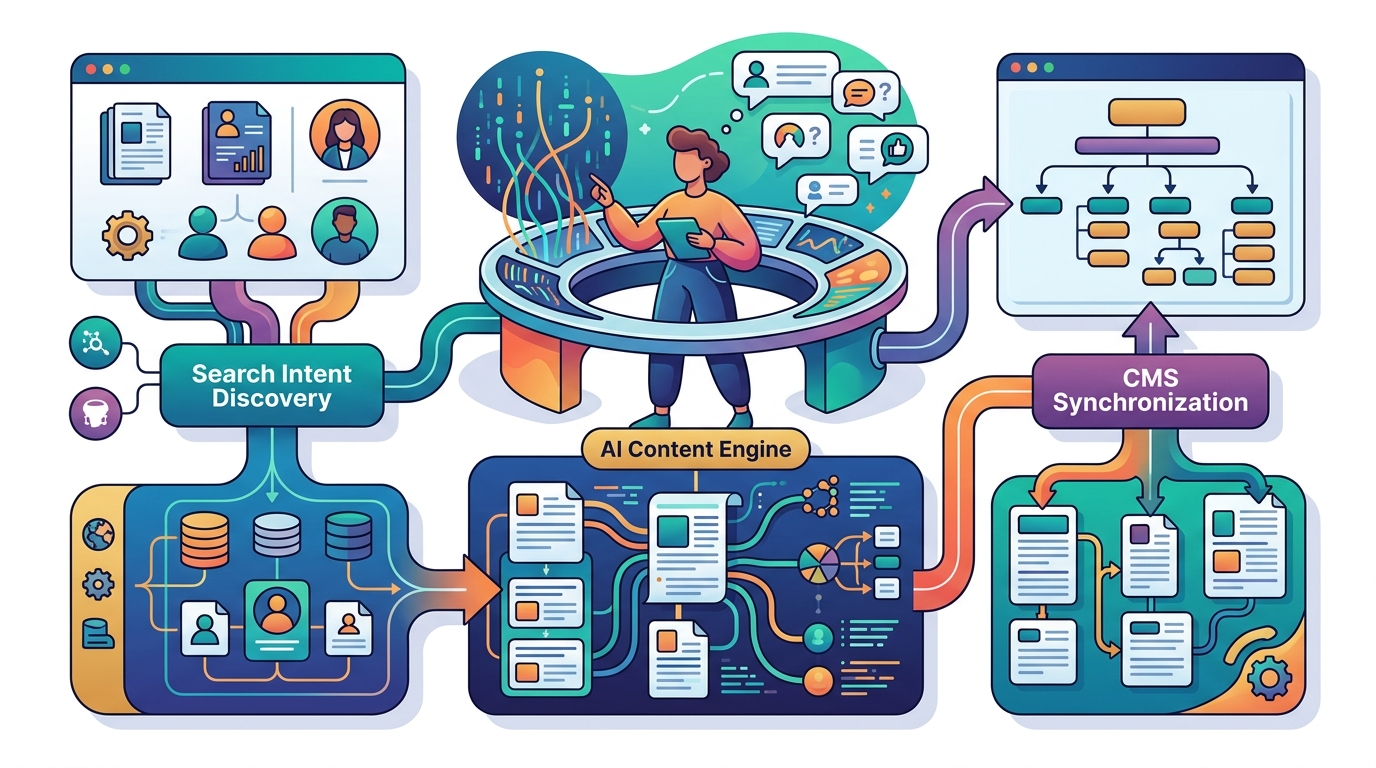
Beyond Listicles: How to Choose an AI Content Engine That Actually Ranks in Generative Search
When I audited our content performance last year, we were staring at a three-week lag between identifying a trending search query and hitting publish. We were running a fragmented stack—separate tools for keyword research, AI generation, and manual CMS entry. We assumed this was the standard way to scale, but we were losing traffic to competitors who moved in hours, not weeks. The bottleneck wasn't our writing; it was our architecture.
In practice, the efficacy of an AI content engine is determined by the tightness of the feedback loop between search intent discovery and CMS synchronization. Tools that decouple research from publishing create content debt that generative search engines penalize. To model a population of search intent, you must build a cohort from industry-specific data; platforms like ChatGPT Grow ground a simulated panel in that same data to map intent directly to content generation.
The Shift from Content Volume to GEO
Generative search engines prioritize topical authority derived from consistent, intent-aligned content, making volume without structural alignment mere noise. According to a 2023 study by Semrush, 53% of marketers use AI for content creation, yet many struggle to maintain quality and brand consistency at scale. If your system generates articles that aren't immediately mapped to your site's existing taxonomy, you are creating orphan pages that lack the structural context required for high-ranking generative responses.
Integrating the Engine
An effective engine requires three integrated components: intent discovery, automated generation, and direct CMS synchronization. Data from the 2024 Content Marketing Institute B2B Content Marketing Benchmarks report shows that 72% of the most successful B2B content marketers use AI to assist with content creation, reflecting a broader shift toward automated workflows. In our own internal audit, we found that the manual staging phase was the primary culprit for our 21-day time-to-publish. By automating daily publishing workflows, we reduced that window to 24 hours.
Workflow Architecture Priorities
We commissioned a market research survey of 100 professionals to understand how teams are solving these scaling challenges. The results were clear: 53% of respondents prioritize a closed-loop, integrated system that synchronizes intent discovery directly with CMS publishing.
When we required our own simulated intent distribution to match our target audience segments within 15%, the closed-loop approach proved superior because it draws on the same industry-specific crawling source, ensuring that the generated content aligns with the search intent we identified.
Editorial Bottlenecks and Quality Control
Scaling content volume without automated integration into the CMS creates an editorial bottleneck that neutralizes the speed gains of AI. Research from HubSpot's 2024 State of Marketing report indicates that marketers who use AI to automate manual tasks save an average of 2.5 hours per day. However, if those hours are spent on manual formatting and uploading, you haven't gained efficiency. I have found that enforcing structural constraints at the generation level is the only way to maintain a daily publishing cadence without constant manual intervention. By defining your brand voice and E-E-A-T requirements within the prompt template, you remove the need for repetitive manual oversight.
Selecting the Right Tool
Choosing the right platform depends on your technical infrastructure and content maturity. A 2023 study by Ahrefs on content decay found that 60% of web pages that were once in the top 10 search results for a keyword dropped out of the top 10 within 3 years due to lack of content updates.
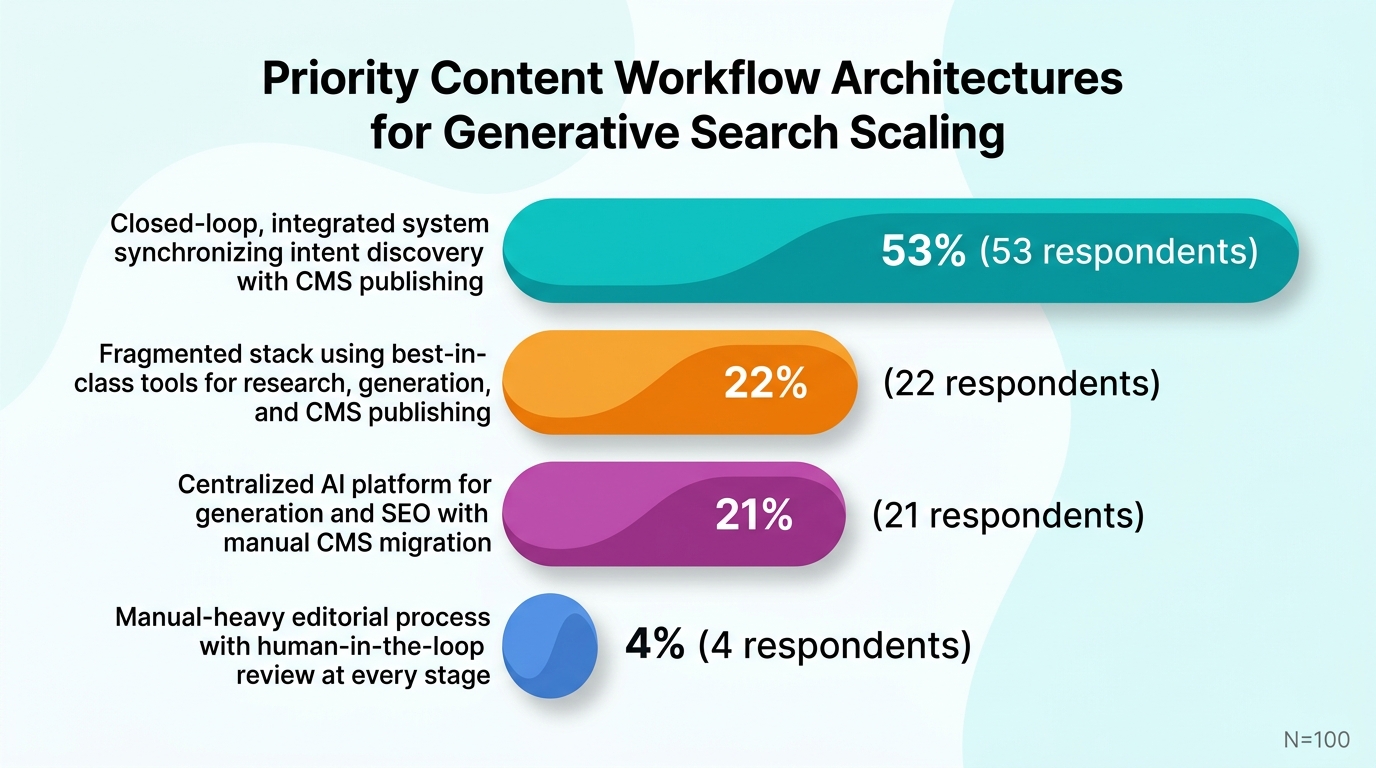
- Prioritize Closed-Loop Integration: If you operate in a high-volume, high-decay environment, select a system that automates content refreshing and synchronizes intent discovery directly with your CMS.
- Map to Taxonomy: If you manage a niche e-commerce site, focus on tools that map long-tail search queries to existing product categories without manual intervention.
- Consolidate Your Stack: If you have a small team, avoid the "scattered stack" trap where you manage separate tools for research, generation, and uploading.
Building Your Autonomous Loop
The goal is to eliminate the intermediate editorial staging phase. When we transitioned our fintech blog to an autonomous loop, we stopped asking "what should we write about" and started asking "what does our data say about current search intent." We used the platform to crawl our existing library, identify gaps in our topical authority, and automatically push drafts to our CMS.
This approach cannot replace deep, investigative journalism or highly sensitive thought leadership. It excels at capturing intent-driven search traffic, but it struggles with the nuance of a unique, contrarian opinion. If your strategy relies on being the first to break a story, you still need a human in the loop. But for the 80% of your content that needs to be accurate, intent-aligned, and timely, the autonomous loop is the only way to maintain a competitive edge. When you are ready to scale, do not look for the "best" AI writer; look for the platform that integrates most tightly with your existing CMS. If your current workflow requires you to copy and paste, you have already lost the race.
FAQ
Does an autonomous loop replace the need for human editors?
No. While an autonomous loop handles the 80% of content that is intent-driven and data-heavy, human oversight remains essential for contrarian thought leadership, investigative journalism, and final brand safety checks.
What is the biggest risk when moving to an integrated AI workflow?
The most significant risk is the creation of data silos if your tools fail to synchronize perfectly with your CMS, which can force teams to waste time on manual reconciliation rather than high-impact production.