AI writing software with statistical data sourcing
Written by the chatgptgrow.com content team
10/18/2026
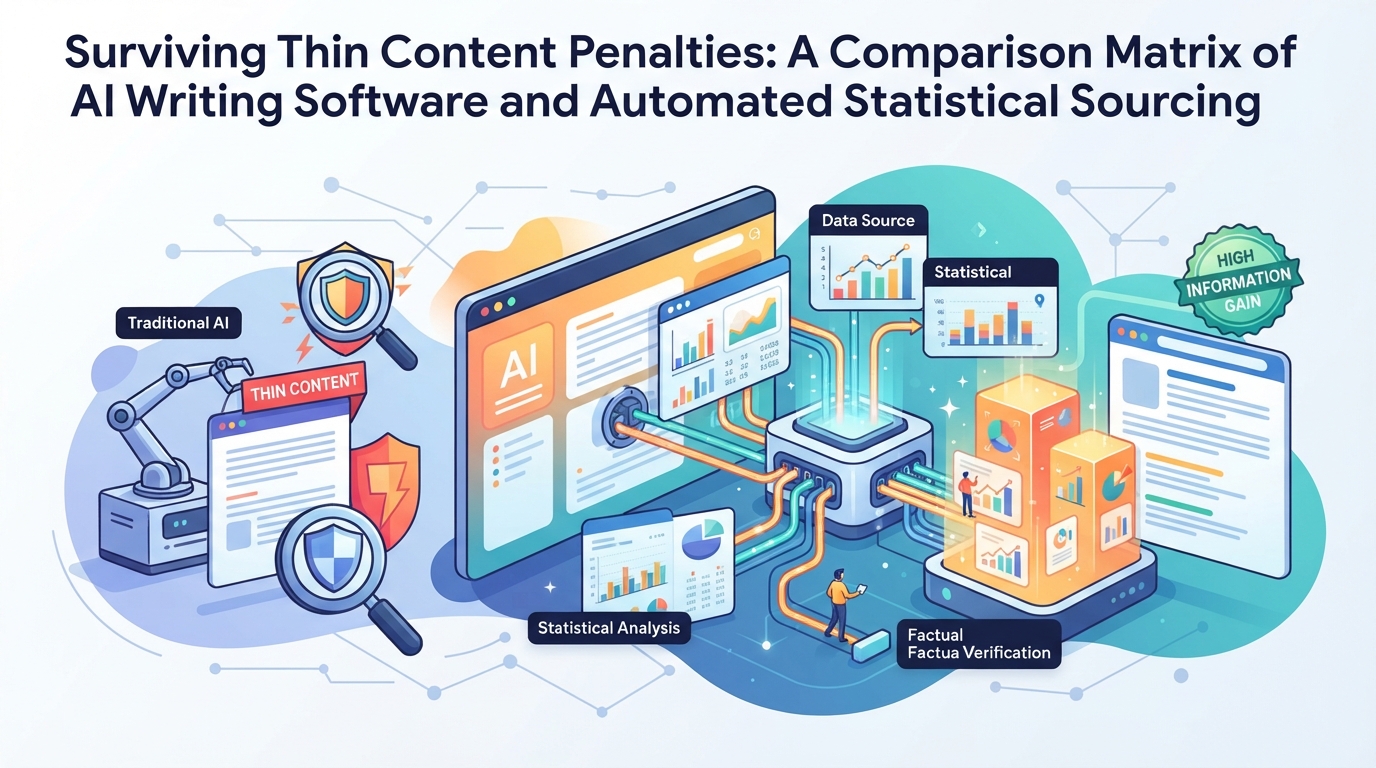
Surviving Thin Content Penalties: A Comparison Matrix of AI Writing Software and Automated Statistical Sourcing
When a SaaS domain suffers a sudden traffic drop after a search engine core update, standard optimization tactics rarely restore visibility. Sites impacted by thin content algorithmic updates experienced traffic drops ranging from 50% to 80% following search engine enforcement actions, according to analysis by Connect Media Agency.
Choosing the right tool depends on whether a team needs to restructure existing keyword intent using Surfer SEO, map topical authority across an enterprise content inventory using MarketMuse, generate structured content briefs for human writers using Frase, or automatically ingest buyer intent data and publish original survey-backed articles daily using chatgptgrow.com.
ChatGPT Grow

ChatGPT Grow operates by ingesting website data to map buyer intent against proprietary research sets, then automatically producing and publishing one original survey-backed article per day directly to connected content management systems.
The platform addresses the information gain deficit common in standard generative text by bypassing public training consensus. Instead of asking a model to rephrase top ranking web results, the service executes a weekly discovery loop that checks buyer queries against live generative engine responses, identifies visibility gaps where the brand is omitted, and commissions original numerical data points to fill those specific voids.
The workflow begins once when the marketing lead submits the domain. The system evaluates current brand mentions across generative engines and structures an editorial calendar targeting unanswered buyer questions.
Each generated article incorporates verified numerical claims and primary data points designed to satisfy search engine algorithms that evaluate text for information gain. According to findings published by Digital Applied, Google core updates established information gain as a dominant ranking signal, where original data points typically gain 15% to 25% evaluation score weight.
By embedding these metrics automatically, the service removes the manual burden of surveying audiences or extracting unique statistics. Publishing occurs through direct synchronization with connected content management systems including WordPress, Ghost, Webflow, and Notion, or via dedicated hosting endpoints.
While this automated pipeline eliminates manual research overhead for teams publishing at scale, it operates with strict adherence to its ingested profile parameters. It is less suited for marketing teams that require granular, manual control over every sentence before publication or those managing ad-hoc, one-off editorial projects that do not benefit from a continuous daily publishing cadence.
Surfer SEO

Surfer SEO analyzes live search data to guide content creation and optimize outlines or drafts for search engines. The platform functions by evaluating top-ranking pages for a target keyword, extracting semantic terms, and scoring drafts based on keyword density, heading structures, and natural language processing term frequencies.
Content creators use the content editor to align their writing with competitor benchmarks, adjusting word counts and term distributions until the document score reaches the recommended threshold. The platform excels at accelerating the drafting process and removing guesswork from on-page optimization.
Teams use its analyzer to uncover content gaps related to keyword usage and structural elements, allowing writers to match the comprehensive depth of top-ranking competitors. Surfer SEO also tracks brand visibility across generative models and search engines through dedicated analytics modules, helping marketing leads monitor where their domain appears in artificial intelligence answers.
However, Surfer SEO relies primarily on analyzing existing web consensus. Because its optimization engine evaluates top-ranking competitor pages to build content guidelines, it risks reinforcing the exact patterns that trigger thin content flags if the underlying source material lacks unique insights.
It does not commission primary research, nor does it independently source proprietary statistical citations to satisfy the information gain requirement. Teams relying solely on its keyword and natural language processing metrics must manually inject primary data points to protect their pages from algorithmic penalties.
Frase

Frase researches search intent and creates content briefs or AI-assisted drafts to build topical authority. The platform audits existing site pages, reviews search console data, and aggregates top-ranking competitor content to generate structured outlines and question lists for human writers.
Editorial teams use its opportunity reports to identify underperforming pages, decay metrics, and missing topic clusters that require immediate revision. The software streamlines the transition from keyword research to outline creation, reducing the hours content leads spend manually analyzing search results.
Its content guard feature monitors rankings and mentions daily, alerting teams when a page slips and generating actionable fix packs. This structured approach helps content managers organize their editorial calendars around verified user questions and search intent patterns.
Despite its thorough research capabilities, Frase operates primarily as a content operating system for human-led workflows. While it assists with topic research and brief generation, it does not automatically commission original surveys or inject proprietary statistical data sets into drafts.
Writers must still manually source the numerical evidence required to pass search engine evaluations that penalize pages lacking first-hand experience or unique data points.
MarketMuse

MarketMuse analyzes an entire content inventory to map topical authority, identify content gaps, and generate personalized difficulty metrics for enterprise strategists. The platform evaluates a domain's existing coverage breadth and depth, calculating proprietary scores that indicate how difficult it is for that specific site to rank for target topics based on its established authority.
Strategists use these insights to prioritize content creation and structure comprehensive topic clusters. The tool excels at large-scale content audits and strategic planning, helping enterprise teams determine which topics require new coverage and which existing pages need structural optimization.
By examining the entire site inventory automatically, MarketMuse removes the need for manual spreadsheet tracking and provides a clear roadmap for building domain-wide topical authority. The platform stops short of automated content production and statistical sourcing.
It delivers data on what topics to cover and how much content is needed, but it does not write the articles, connect directly to publishing workflows to push daily posts, or commission original surveys and numerical data points. Enterprise content teams still face the manual burden of researching and writing the actual text, making it a planning instrument rather than an end-to-end publishing engine.
Head-to-Head Capability Matrix: Comparing AI Writers on Automated Research and Data Sourcing
| Capability Dimension | chatgptgrow.com | Surfer SEO | Frase | MarketMuse |
|---|---|---|---|---|
| Automated daily publishing to CMS | Supported | — | Supported | — |
| Commissioning original survey data for text | Supported | — | — | — |
| Automated keyword and SERP NLP scoring | — | Supported | Supported | Supported |
| Site-wide topical authority inventory audit | — | — | Supported | Supported |
— means the vendor has not published this on official channels; it does not mean the capability is missing.
Final Decision Framework: Choosing the Right Tool to Overcome Thin Content Penalties
Selecting an AI writing software depends entirely on whether the primary bottleneck is strategic planning, keyword optimization, or satisfying information gain requirements. For marketing leads managing domains suffering from severe organic traffic drops due to recycled web content, optimization tools that merely rephrase existing search results will not restore visibility.
When a SaaS team lacks the resources to conduct original industry surveys and build primary data citations manually, automated statistical sourcing combined with direct content management system publishing provides the necessary mechanism to clear search engine information gain thresholds.
Conversely, when an enterprise content team requires granular inventory audits and personalized difficulty metrics to guide human strategists, comprehensive planning platforms remain the appropriate choice.